viernes, 15 de marzo de 2013

Types of farming

There principal types of farming are:

  1. Capital investment and labour.


  • Extensive livestock farming: capital investment (in feed, farms...) is limited and productivity low. The livestock is mostly cattle and sheep, and grazes on large pastures in the open air.
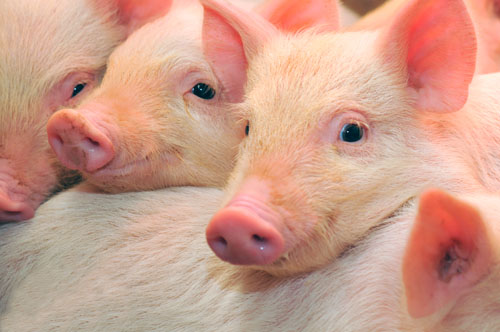
  • Intensive livestock farming: capital investment (in feed, farms...), labour and productivity are high. Mostly cattle, pig and poultry are farmed.
     2. Food and feeding methods.
  • Grazing livestock: animals feed on grass. This is an example of extensive farming.
  • Confined livestock: animals are kept in sheds and covered pens, and eat feed. This is an example of intensive farming.
  • Semi-confined livestock: in summer, the animals eat grass; when there is not enough grass, they eat feed.


      3. Mobility of livestock:
  • Nomadic herding: herders and their families are constantly moving with their animals in search of good pasture.
  • Transhumance (seasonal migration of livestock): herders move their animals several times a year between winter and summer pastures.
  • Sedentary livestock farming: animals don't have to move around to obtain food because farmers give them feed.


Primary economic activity word map

The primary sector of the economy extracts or harvests products from the earth. The primary sector includes the production of raw material and basic foods.
Activities associated whit the primary sector include:

  1. Agriculture. 
  2. Mining.
  3. Forestry.
  4. Farming.
  5. Grazing.
  6. Hunting.
  7. Cathering.
  8. Fishing.
  9. Quarrying.

Here there´s a world map of Primary Sector:


Gross domestic product of countries in the world


The Gross domestic product (or GDP) refers to the monetary value of all the finished goods and servives produced within a country´s borders in
a specific time period, though GPD is usually calculated on an annual basis. It includes all of private and public consumption, government outlays, investments and exports less imports that occur within a defined territory.
To calculate the GDP in a place:

                                                       GDP = C+G+I+NX

Where:
"C" is equal to all private consumption, or consumer spending, in a nation's economy
"G" is the sum of government spending
"I" is the sum of all the country's businesses spending on capital
"NX" is the nation's total net exports, calculated as total exports minus total imports. (NX = Exports - Imports).


Here you´ve got a list of the largest economies by nominal GDP, 2011: 


martes, 5 de febrero de 2013

Blog:There Is No Energy Crisis, There is a Crisis of Ignorance

That's the video:
http://www.youtube.com/watch?v=-fVI3BRBC6o

This video shows how it is the reality of the world in terms of energy use: as the so-called 'developed countries' abuse of these means of energy that cause pollution in our environment. The sources from which we take these energy are low and increasing at the same time their price and demand; of course that its price is not only monetary if not also environmental.
People have been searching for a means of sustainable energy, related among Nations which, thanks to the technologies of the 21st century, could become a reality. Humanity is not carrying out the use of all the resources offered by our planet (solar, hydroelectric energy...), although we are starting to use them but slowly and a progressive form.
With the union of all countries of the world and the collaboration of all its inhabitants will be able to reduce pollution and climate impact, as well as improve the quality of life of the "third world countries".
All must work together so that our planet still exists.


Bar chart of income per capita of the countries E.U.


Income per capita

A measure of the amount of money that is being earned per person in a certain area. Income per capita can apply to the average per-person income for a city, region or country and is used as a means of evaluating the living conditions and quality of life in different areas. It can be calculated for a country by dividing the country's national income by its population.
Here you´ve got a bar chart of income per capita of the coutries E.U in 2006.