Mostrando entradas con la etiqueta 3ª evaluación. Mostrar todas las entradas
viernes, 21 de junio de 2013
Chinese orphanages
That's the video:
www.youtube.com/watch?v=QB7CZci3xFg
This video shows us one unknown reality, as others many, life in China, in this case, the life of children.
Travel reporters, go in search of the so-called "death room", it appears there in various Chinese orphanages. On their journey, they are different orphanages in which, apparently there is no such room, but in its inquiries, find that the status of many of the children found there, is dire: tied to chairs the more small, avandonados and forgotten all of them, no more attention than that provided between them.
Also shows the true effect to him(her) the "only child" law, according to which, a couple can not have more than one child (caters to firstborn males); as a result, thousands of children are abandoned, and in the streets, they are taken to these "orphanages".
At their last stop, discovered what they had been looking for from the beginning, the dreaded rooms. In it, two small variety, covered with a blanket suffered the agony of death slowly...
Without a doubt, one of the worst documetales I have seen, and that, frankly, makes me feel certain "repulsion" towards that country, if it is that you can call as well.
Agree that China is crowded, but it is not normal that those damned poor, who already have enough not to have family, have to wait for death; There are no rooms at the death, all the orphanages are already.Someone help them? The answer: no.
21 Days in the mine
That's the video:
http://www.mitele.es/programas-tv/21-dias/temporada-2/programa-9/
21-Day series issued a new program: 21 days in the mine.
This chapter shows us the reality that, once more, lies before us.
For this story, Samanta Villar moved to Bolivia, where will spend 21 days as one worker more extracting Tin from an abandoned mine. For the first time the journalist arises give up, due to the inhumane conditions and danger in which men and women work in the mine. In the story we see how is the process of extraction of ore, and as families in the region, focusing on Marlene, the only woman working in the mine. Samanta alongside her and the children, while it looks like the woman survives with a low wage and with the concern to die at any time, at the mine or in the outside, since (as shown in the video) your drunken ex-husband show up more than once at the home of Marlene, telling us she, which tried to burn them alive.
I must say that in my opinion, this documentary does not have no point of comparison with Chinese orphanages. It is true that it is hard, and shows a reality that I never imagined me, but this family and many others, has played live. And I ask myself, they can pay them that misery, risking them every day of their lives?
Of course, am against of that works, although not as serious as the Chinese orphanages, also they face death everyday, and show us everything you have to overcome.
http://www.mitele.es/programas-tv/21-dias/temporada-2/programa-9/
21-Day series issued a new program: 21 days in the mine.
This chapter shows us the reality that, once more, lies before us.
For this story, Samanta Villar moved to Bolivia, where will spend 21 days as one worker more extracting Tin from an abandoned mine. For the first time the journalist arises give up, due to the inhumane conditions and danger in which men and women work in the mine. In the story we see how is the process of extraction of ore, and as families in the region, focusing on Marlene, the only woman working in the mine. Samanta alongside her and the children, while it looks like the woman survives with a low wage and with the concern to die at any time, at the mine or in the outside, since (as shown in the video) your drunken ex-husband show up more than once at the home of Marlene, telling us she, which tried to burn them alive.
I must say that in my opinion, this documentary does not have no point of comparison with Chinese orphanages. It is true that it is hard, and shows a reality that I never imagined me, but this family and many others, has played live. And I ask myself, they can pay them that misery, risking them every day of their lives?
Of course, am against of that works, although not as serious as the Chinese orphanages, also they face death everyday, and show us everything you have to overcome.
Blade Runner
That's the trailer of the film:
https://www.youtube.com/watch?v=SFI0OF7NNYc
Rick Deckard is a former "blade runner" called out of retirement to hunt and kill four "replicants".
These genetically altered humans with superior strength and intellects have returned to earth on a killing spree.
Deckard falls in love with a woman who happens to be one of the replicants, but she does not know, because you have implanted memories.
Continuing deaths are happening. Murders three replicants Deckard, while other characters die by the hand of Roy Batty (leader of the replicants). Among the dead are JF Sebastian (Toymaker robots) and Dr. Eldon Tyrell (the creator of the replicants).
At first, I did not understand the film, I found it irrational and didn't understand the argument.
Gradually, I began to understand who they were and what the replicants wanted. The mix of love, drama and action, resulting in a film with unexpected twists and surprising.
The best thing was this end of reflection that each could interpret to his way.
These genetically altered humans with superior strength and intellects have returned to earth on a killing spree.
Deckard falls in love with a woman who happens to be one of the replicants, but she does not know, because you have implanted memories.
Continuing deaths are happening. Murders three replicants Deckard, while other characters die by the hand of Roy Batty (leader of the replicants). Among the dead are JF Sebastian (Toymaker robots) and Dr. Eldon Tyrell (the creator of the replicants).
At first, I did not understand the film, I found it irrational and didn't understand the argument.
Gradually, I began to understand who they were and what the replicants wanted. The mix of love, drama and action, resulting in a film with unexpected twists and surprising.
The best thing was this end of reflection that each could interpret to his way.
sábado, 23 de marzo de 2013
Blog: World Population growth
What's population growth?
Population growth is the change in a population over time, and can be quantified as the change in the number of individuals of any species in a population using "per unit time" for measurement. In biology, the term population growth is likely to refer to any known organism, but this article deals mostly with the application of the term to human populations in demography.
That´s the video: https://www.youtube.com/watch?v=4BbkQiQyaYc
That video talk about the growth of the world population.
This growth depends on scarce resources (water, food ...). The video shows how the world population grew from 2000B.D to 2030A.D, influenced by the Industrial Revolution (1978), Modern Medicine (1990) and the Information Age (2000). Growth slowed mainly by the Black Plague of 1913.
Blog: Globalization, by Noam Chomsky
That's the video:
http://www.youtube.com/watch?v=RdYwAXZh0ME
What's globalization?
Globalization is the process of extending social relations across world-space. Such extensions arise from the movements of people, things and ideas. It cannot be defined in terms of internationalization or integration as some theorists have suggested, though these developments might be an outcome of globalization Globalization describes the interplay across cultures of macro-social forces. These forces include religion, politics, and economics.
This video of Noam Chomsky, talks about various aspects of world globalization.
Everyone is in favor of globalization, but will be in the interest of the people or of private power?
By neutral, globalization has decreased in many aspects such as
Decreased free movement across borders, but also grows, as the movement of capital.
I'm for globalization to exchange food ... between countries, learning from their culture.
http://www.youtube.com/watch?v=RdYwAXZh0ME
What's globalization?
Globalization is the process of extending social relations across world-space. Such extensions arise from the movements of people, things and ideas. It cannot be defined in terms of internationalization or integration as some theorists have suggested, though these developments might be an outcome of globalization Globalization describes the interplay across cultures of macro-social forces. These forces include religion, politics, and economics.
This video of Noam Chomsky, talks about various aspects of world globalization.
Everyone is in favor of globalization, but will be in the interest of the people or of private power?
By neutral, globalization has decreased in many aspects such as
Decreased free movement across borders, but also grows, as the movement of capital.
I'm for globalization to exchange food ... between countries, learning from their culture.
jueves, 21 de marzo de 2013
martes, 19 de marzo de 2013
Blog : Developed Nations versus Underdeveloped Nations
That's the video:
http://www.youtube.com/watch?v=OrL6CaXd3js
This video, as its title suggests, talks about the differences between developed and undeveloped.
In the video we teach two graphs:
The annual consumption of beef in the world (in which it is emphasized that America and Africa are the largest consumers) and the annual emission of harmful gases, of which 80% are to bear the undeveloped countries, highlighting the U.S. and China as the most polluting.
Before the waste than developed countries, is a reality of poverty and hunger, which leads to the population of underdeveloped countries to death.
In this feature the sentences quoted by The Most Reverend Desmond Tutu (Archibishop of South Africa): My humanity is bound up in yours, for be can only be human together.
Together, this world could be better, but one thing is another theory and practice, everyone and I mean everyone, should be carried out.
http://www.youtube.com/watch?v=OrL6CaXd3js
This video, as its title suggests, talks about the differences between developed and undeveloped.
In the video we teach two graphs:
The annual consumption of beef in the world (in which it is emphasized that America and Africa are the largest consumers) and the annual emission of harmful gases, of which 80% are to bear the undeveloped countries, highlighting the U.S. and China as the most polluting.
Before the waste than developed countries, is a reality of poverty and hunger, which leads to the population of underdeveloped countries to death.
In this feature the sentences quoted by The Most Reverend Desmond Tutu (Archibishop of South Africa): My humanity is bound up in yours, for be can only be human together.
Together, this world could be better, but one thing is another theory and practice, everyone and I mean everyone, should be carried out.
Economic development around the world
Economic development generally refers to the sustained, concerted actions of policymakers and communities that promote the standard of living and economic health of a specific area. Economic development can also be referred to as the quantitative and qualitative changes in the economy. Such actions can involve multiple areas including development of human capital, critical infrastructure, regional competitiveness, environmental sustainability, social inclusion, health, safety, literacy, and other initiatives. Economic development differs from economic growth. Whereas economic development is a policy intervention endeavor with aims of economic and social well-being of people, economic growth is a phenomenon of market productivity and rise in GDP. Consequently, as economist Amartya Sen points out: “economic growth is one aspect of the process of economic development.
For and against tourism
From the perspective of tourists come to you:
|
Generates
employment in the service sector.
|
Cultural
exchanges between people- leading to greater understanding.
|
Tourism
income may help to conserve natural landscapes, wildlife and
cultural heritage.
|
Local
businesses benefit via business by association.
|
Natural
landscape/cultural heritage may be damaged by huge numbers of
visiting tourists and their activities.
|
|
Tourists
may disturb wildlife- i.e. Feeding and breeding cycles.
|
Profits
may leak aboard from the country; the companies involved may be
foreign owned.
|
Tourist
developments may not be sympathetic to the local environment.
|
Many
tourism jobs are seasonal, low skilled, part-time and low paid.
|
Over 200 million
people are employed in the tourist industry.
|
|
Locals
may benefit from improved
infrastructure and facilities.
|
Commercialisation
may devalue the traditions/artefacts of local people.
|
Increased
employment opportunities and spending in an area results in a
positive multiplier effect.
|
Local
infrastructure might not be able to cope with increased pressure
from tourists i.e. Water and waste.
|
Tourist
income may help to maintain cultural heritage and traditions.
|
|
Tourists
may not to go outside of
their complexes/tours- a blinkered view of an area/ way of life
develops.
|
Increased tax
revenues, which may be used to fund local services and improve
infrastructure.
|
Employment
develops the skills of the local population.
|
Tourists strive
to find unique locations; once a place becomes popular they will
often move to find an undeveloped location.
|
Tourism
is an unreliable sector to base economic development; places may
fall out of fashion or be influence by World events.
|
|
11% of all global
earnings are from tourism, around £258 billion pounds.
|
Developments
may be owned by multinationals- management positions may be
occupied by foreign workers.
|
Tourists can
frustrate locals; they can impede their daily lives.
|
Western
values may conflict with local values- e.g. How individuals act or
are dressed.
|
Tourist
voyeurism- expecting to watch the natives and their strange ways!
|
Factory location influences
Location: where they carried out productive activity:
- Decision structural
- great investment
- Long-term implications
- irreversibility
- Decisions faq / unique
- Influence on competitiveness
Acts that influence location decisions:
- Insufficient or excessive production capacity.
- Release or removal of products.
- Camobios technology.
- Changes of inputs.
- Geographical shift in demand.
- Mergers or acquisitions.
- Globalization of the economy.
Factors influencing location decisions:
Tangible cost
- Labor
- ground
- raw materials
- Rent or buy
- Energy / Water
- Taxes and insurance
Cost intangible
- Community attitudes
- State and Local Laws
- costs climatological
- Competition in labor unions
Ligh Industry
A section of an economy's secondary industry characterized by less capital-intensive and more labor-intensive operations. Products made by an economy's light industry tend to be targeted toward end consumers rather than other businesses. Consumer electronics and clothing manufacturing are examples of light industry.
Light industry is usually less capital intensive than heavy industry, and is more consumer-oriented than business-oriented (i.e., most light industry products are produced for end users rather than as intermediates for use by other industries). Light industry facilities typically have less environmental impact than those associated with heavy industry, and zoning laws are more likely to permit light industry near residential areas. It is the production of small consumer goods.
One economic definition states that light industry is a "manufacturing activity that uses moderate amounts of partially processed materials to produce items of relatively high value per unit weight".
Examples of light industries include the manufacturing of clothes, shoes, furniture, consumer electronics and home appliances.

Light industry is usually less capital intensive than heavy industry, and is more consumer-oriented than business-oriented (i.e., most light industry products are produced for end users rather than as intermediates for use by other industries). Light industry facilities typically have less environmental impact than those associated with heavy industry, and zoning laws are more likely to permit light industry near residential areas. It is the production of small consumer goods.
One economic definition states that light industry is a "manufacturing activity that uses moderate amounts of partially processed materials to produce items of relatively high value per unit weight".
Examples of light industries include the manufacturing of clothes, shoes, furniture, consumer electronics and home appliances.

Bar chart of the number of internet users in the world
The Internet is a global system of interconnected computer networks that use the standard Internet protocol suite (TCP/IP) to serve billions of users worldwide.
This IT network has revolutionised the mass media because it includes press, television and radio.
It also allows users to download multimedia files that contain television and radio programmes, blogs...
This IT network has revolutionised the mass media because it includes press, television and radio.
It also allows users to download multimedia files that contain television and radio programmes, blogs...
Map of the main tourist areas
Tourism refers to trips that people take for recreation from the place where they live to another for a limited period of time, It involves spending at least one night away from home.
Tourism is seasonal and is determined by physical (relief, climate, vegetation...) and human factors (roads, restaurants, accomodation...). There are different types of tourism:
- Beach tourism.
- Active tourism.
- Nature tourism.
- Cultural tourism.
- Healthy and beauty tourism.
- Congress and convention tourism.
Here there's a map of the main tourist areas in the world.
And if you want to know Spain, you have here a map of the most important national claims of Spain:
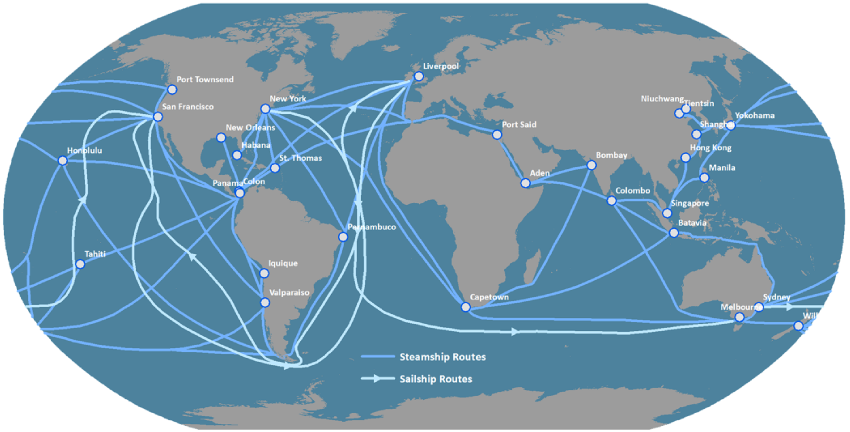
Map of world trade
World trade is the different routes to the market between different parts of the world. Here you can see two maps of world trade routes:
martes, 5 de febrero de 2013
Blog:There Is No Energy Crisis, There is a Crisis of Ignorance
That's the video:
http://www.youtube.com/watch?v=-fVI3BRBC6o
This video shows how it is the reality of the world in terms of energy use: as the so-called 'developed countries' abuse of these means of energy that cause pollution in our environment. The sources from which we take these energy are low and increasing at the same time their price and demand; of course that its price is not only monetary if not also environmental.
People have been searching for a means of sustainable energy, related among Nations which, thanks to the technologies of the 21st century, could become a reality. Humanity is not carrying out the use of all the resources offered by our planet (solar, hydroelectric energy...), although we are starting to use them but slowly and a progressive form.
With the union of all countries of the world and the collaboration of all its inhabitants will be able to reduce pollution and climate impact, as well as improve the quality of life of the "third world countries".
All must work together so that our planet still exists.
http://www.youtube.com/watch?v=-fVI3BRBC6o
This video shows how it is the reality of the world in terms of energy use: as the so-called 'developed countries' abuse of these means of energy that cause pollution in our environment. The sources from which we take these energy are low and increasing at the same time their price and demand; of course that its price is not only monetary if not also environmental.
People have been searching for a means of sustainable energy, related among Nations which, thanks to the technologies of the 21st century, could become a reality. Humanity is not carrying out the use of all the resources offered by our planet (solar, hydroelectric energy...), although we are starting to use them but slowly and a progressive form.
With the union of all countries of the world and the collaboration of all its inhabitants will be able to reduce pollution and climate impact, as well as improve the quality of life of the "third world countries".
All must work together so that our planet still exists.
Suscribirse a:
Entradas (Atom)